Neil Burnell, a 3LT Pro Team member & Atmospheric Landscape Photographer, writes a guest blog post all about shooting woodlands, how to get started and his tips and tricks!
While many landscape photographers are drawn to shooting sunsets and sunrises with drama light and colour, I've always taken more enjoyment from shooting in conditions more suited to atmospheric scenes. Woodland can be a daunting genre for many photographers who are led to believe that it's an extremely difficult subject to master. While I agree it's not an easy subject, I'd also say that all genres are difficult if you don't put the time and effort into them. I've found woodland to be an enjoying challenge and extremely satisfying when it all comes together.


Rise to the challenge
To begin with, woodland can be a bit overwhelming: tangled trees seem like a complete mess and it's hard to make sense of it all let alone take an image. Almost certainly the best place to start your woodland journey is by going on a few scouting missions – try keeping it local if you can. Travel light and go with no expectations and I can almost guarantee you will find some scenes with potential that you can return to. Work the edges of the woodland first. Looking into a woodland can often reap rewards and is an easier way to spot compositions, especially if you haven't shot this genre before.
Heading straight into a woodland can often be very overwhelming. Once you've found a scene make sure you give it time by checking out various angles and taking reference shots, so you are fully prepared when the conditions are right. When you first start shooting woodland, don't expect to shoot keepers from day one. Yes, it can happen, as in every genre, but I almost guarantee that it will take some time and several outings for your confidence to grow first.


Check weather conditions
It's fairly obvious, but fog or mist are an essential ingredient in the majority of my atmospheric woodland images. These conditions are not only essential to create mood, but they also help dramatically when it comes to picking out compositions and isolating subjects of interest. The time of day is also a key ingredient. For my own images, I prefer the softer muted light of blue hour, especially when the objective is mood. Of course there are other ways to isolate subjects, like using fast lenses wide open to create a shallow depth of field, but if you want that atmosphere make sure you head out on those misty days.


Research locations
There are several places I enjoy shooting and exploring when I want to try and create atmospheric images. The first is Wistman's Wood in Devon. It's an amazing location and one that every photographer who likes to shoot woodland should visit at least once. It's a very small woodland and can be extremely difficult to shoot and negotiate your way around, but if you get lucky with the conditions it really is a magical place. The second spot is Haldon Forest in Devon – a place I'm only just finding my way round. It has massive potential and I'm hopeful I will shoot some keepers there this year. The woodland itself has an abundance of various species from gnarly oak to silver birch, providing great variety and endless opportunities for photography. Another great Devon location is Churston Woods. There are a few small woodlands close to my home and on the rare occasion there is fog locally I will head to Churston Woods. There are also some nice trees on the local golf course, which I have shot in some thick fog, after seeking permission from one of the greenkeepers.


Shooting and processing
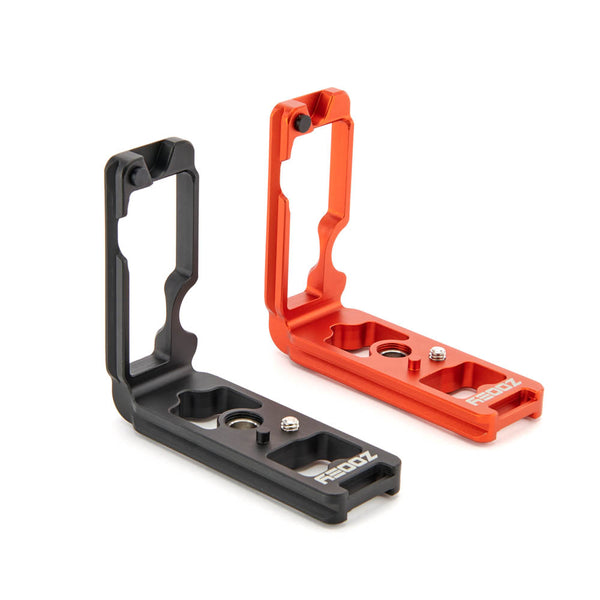
My typical woodland set-up has recently changed, as I've collected a few old Nikkor AIS lenses. I currently use a Nikon Z8 with 24-70 f2.8 and 70-200 F2.8, a 3 Legged Thing Winston tripod with Zooey Z8 L-Bracket; Vanguard Alta Sky 51D bag; Kase Polariser; and Nikon cable release.
When it comes to processing, we all have our own style. Over the past two to three years my processing style has changed dramatically, as I've been inspired by various photographers. For me, the most important thing is to experiment and get a feel for the type of image I want to create, using the sliders to see how they affect an image. Don't be scared to push the colours in a direction that suits your tastes. As my Mystical series was all shot during the blue hour, I really wanted to emphasise that soft blue light. I did this by using a mixture of tweaking the Colour temperature and Split tones. I've also added a fair bit of noise to the images, which were originally shot between 100-800 ISO – this is just something I liked at the time as I felt it added to the mood of the image. Finally, I flattened the tones slightly using curves and desaturated. I feel the end results really represent how I visualised the scenes in my mind when I was there shooting.