Macro expert and 3LT Pro Team member Geraint Radford shares tips about macro photography.
This time we have a guest blog post written for us by macro expert Geraint Radford where he shares his tips for outdoor macro and close-up photography.
Exploring the secret macro world can be one of the most rewarding and exciting genres of photography. Popping on a macro lens opens the door to brand new possibilities and allows us to capture fascinating images of hidden scenes and cool creatures that we otherwise can't see.
The downside is that can take a bit of getting used to! Especially if we want to photograph mini beasts in the wild, but fear not! There are a few things we can do that will help!
Tip One: Choosing a Macro Lens.
The focal length of our macro lenses will determine how far away we can be from our subjects.
For insects, a focal length of at least 100mm offers decent working distance which reduces the chances of us scaring our subjects away. For static subjects, this isn't an issue, and a shorter focal length would be fine.
My main macro lens is the OM SYSTEM 90mm macro lens. It has an effective view of a 180mm thanks to my M43 sensor, but I also carry my 60mm and 30mm macro lenses to have as much flexibility as possible.

Tip Two: Stability is key for Macro photography.
Macro lenses amplify details, but they are unforgiving and accentuate camera shake as we get closer to our subjects.
Some cameras and lenses have in built stability, such as my OM-1 which has up to eight stops of compensation, but not everyone has this option, and there are times where a tripod is essential or just fun to use.
Working close to our subjects reduces our depth of field rather significantly, making it a bit tricky to get large areas of our subjects in focus, should we want to, of course! Art has no bounds!

Selecting a wide aperture gives us a shallow depth of field, at F5 the background is out of focus, placing the emphasis on certain parts of the image, and it has a dreamy look to it that works nicely.

Photographing this flower at F11 increases depth of field, much more of the scene is in focus but closing the aperture reduces the amount of light reaching the camera sensor (there's always a trade off!). In this case, the shutter speed was one second at ISO 200. A sturdy tripod is essential at these shutter speeds plus focusing is much easier when the camera isn't moving.
We have other ways of increasing depth of field, and we will come to that later.
Tip Three: Lighting
For me lighting is one of the most important factors in achieving a cool macro image. We have many options available to us to light our subjects and we can get creative!
Natural Light has a lot of advantages, my favourite one being that it is free! We can work with nature to capture some awesome images.

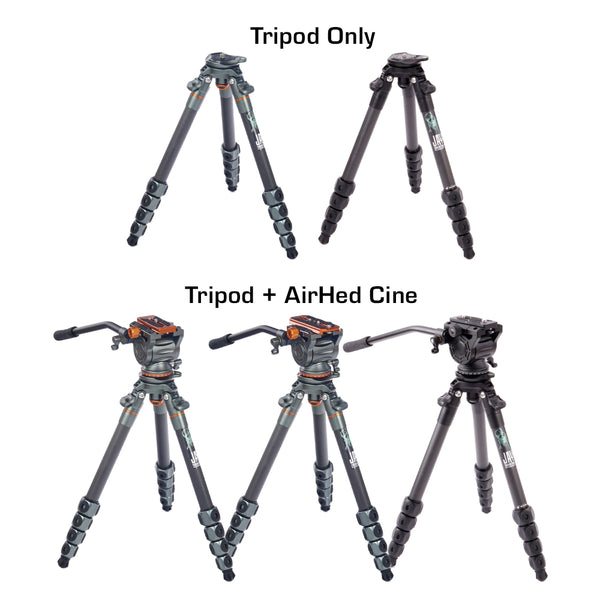
Overcast lighting is great for revealing details and minimizing harsh shadows or highlights. I found this click beetle, relaxing on a bluebell so I set up Jay (my tripod), found a composition that I liked and waited for a pause in the wind before capturing this shot.

Sunset offers amazing opportunities to capture unique images. This mushroom is just a few millimetres and had grown on a fallen Ivy leaf.

Backlighting is my favourite way to use light, especially with translucent subjects like this snail or certain species of mushrooms.
LED lighting lets us see how the light will behave before we've taken our photograph, and we can play with different angles, and the direction of light which can change the vibe of our images a lot.


The images of this mushroom look very different because of the angle and direction of light. I used the torch on my phone to illuminate the scene. Securing the camera to a tripod helps us experiment and find a way that suits our own style of photography.

It is essential to diffuse the flash, especially when photographing shiny bugs. A good flash diffuser will soften the light and retain the highlights. I chose the Cygnustech flash diffuser for my set up.

Damselfly portrait. Handheld, focus stacked image. 26 frames.
Look at that face! Diffused flash brought out all the details without creating burned out highlights.

Soldier Beetle single shot image at F11. Balancing the flash power against natural backlight allowed me to detail the rim lighting whilst illuminating the front of the beetle too.
Tip Four: Composition I believe this is where the artistry comes into photography. Our images are an extension of ourselves. We choose where we place our subject in the frame, we decide what is included or excluded from the photograph, the colour tones and backdrop all come together to shape how we want to portray our subjects and it is so fun to explore different angles.
Look for contrasting colours to make your subject stand out.
Keep backgrounds free of distractions.
Including the habitat can give context to your images.
Getting in close will create super engaging portraits.

Crab Spider upon a flower. Focus stack 15 images, flash diffuser, hand held.
https://www.3leggedthing.com/media/blog/lesserstagbeetle.jpg
Lesser Stag Beetle 65 image stack, hand held, flash and diffuser.

Pregnant Fly, taking off. Single shot f14, Flash and Diffuser, hand held

Steampunk Clegg Fly, 6 image stack, hand held, flash and diffuser.
Tip Five: Focus Stacking
Focus stacking allows us to increase our depth of field by shooting multiple images of our subject, taken at different focusing distances, and then blending the sharp areas together using software such as Photoshop, Helicon and Zerene to name a few.
Focus stacking is an advanced method of shooting that takes a lot of practice and patience but it is worth the effort.
Set the exposure manually because each frame should be consistently lit. It is possible to shoot focus stacks without a tripod if we use a flash and diffuser, or a higher ISO to achieve a fast shutter speed. Newcomers to this technique will benefit from working with a tripod because the images need to stay aligned, and there is little room for error.


Froghoppers are only around 5mm in size and we can see in the first and last shots of this sequence that the depth of field is very shallow at high magnifications. This image was shot at F5 to maintain the fastest shutter speed available under the available light. If it were brighter, I would have closed down the aperture and shot fewer frames but life isn't that easy!
My camera moves the focus automatically but those without this feature can manually adjust the focusing ring on the lens, taking care not to miss any areas as the focal plane shifts through the scene.

165 images blended in Zerene
Look at all those details! Well worth all the effort. Fun fact, this little guy was firing poop bubbles at me while I was taking this image. Talk about suffering for one's art.

A tiny snail and mushroom. On the edge of a leaf.
Using flash allows us to close our apertures and achieve faster shutter speeds. This image was shot at F14 and 1/250th ISO 400 and is a handheld focus stack of two frames.

Caught in the rain with a Damselfly. A handheld focus stack of 20 frames at F11. We were both rather soggy but at least I had a hot coffee and biscuits to look forward to.

After Life - Pin fungi growing on a deceased earwig, this was way too cool not to photograph! 177 images, Flash and diffuser, Tripod.
Bonus Tip...
Enjoy the process, not just the outcome.
Macro photography is challenging at first, but it gets slightly easier over time. We are working with nature so the wind will pick up during a long exposure, or the subject will walk away just as we're ending a 400 frame focus stack, sure you'll cry a little but we carry on!
Head outside, take a flask of your favourite hot drink, maybe some snacks and make a day of it, the rest will fall into place.
Time spent doing what we love is never time wasted, even if we don't get any images from a long day of photography, at least we had fun...

All images in this article created by and ©Geraint Radford.