


Reservoir Mods – Precision Airgun Moderators
Reservoir Mods – Precision Airgun Moderators - is backordered and will ship as soon as it is back in stock.
Delivery and Shipping
Delivery and Shipping
Delivery
For most UK addresses, orders are sent via Royal Mail First Class or DPD for larger or heavier items.
Delivery typically takes 1-5 working days, depending on the service used. Many orders placed before 12 noon arrive the next working day (Monday-Friday).
Orders over £50 qualify for free shipping to most UK addresses.This excludes shooting products that require Royal Mail 18+ Signed-for Delivery.
Remote Locations (Highlands, Islands & Northern Ireland)
Deliveries to Scottish Highlands, offshore islands, and Northern Ireland may require alternative courier services due to higher delivery costs in these regions.
Small parcels under 350g are sent via Royal Mail and qualify for free shipping if the order value is over £50.
Larger or heavier items are shipped via UPS, and shipping charges will be calculated at checkout, but in most cases it will cost £9.99.
Delivery typically takes 2-5 working days, depending on the service used.
Returns
If you are not satisfied with your purchase, we have a 30-day returns period. In the first instance, please contact our support team via email: support@3leggedthing.com
Royal Mail Deliveries
All orders placed via this website are processed as business-to-consumer (B2C) eCommerce transactions. If you are a business customer requiring business-to-business (B2B) purchasing, please contact us directly prior to ordering.
Got a question?
Got a question?
Just ask, we won't bite...
Contact us here.

Reservoir Mods – Precision Airgun Moderators
Description
Description
Two Profiles. Same Performance.
Wavy Profile (RSV1)
A flowing, organic exterior with subtle contouring. RSV1 offers a softer visual language while retaining the same internal geometry and suppression performance as RSV2.
Chamfered Profile(RSV2)
A sharper, faceted design with clean chamfers and a more technical aesthetic. RSV2 is visually bold but mechanically identical inside.
Profile choice is purely about looks and feel — performance remains unchanged.
Compact design for balance and handling:
- 5-chamber modular design
- 14.5 cm (5.7") length
- 36 mm (1.4") diameter
- Internal volume: 59 ml
- Ideal for compact setups
Why choose Reservoir Mods?
Because effective sound suppression isn’t about brute size — it’s about controlling air intelligently. Reservoir Mods are tuned to manage pressure smoothly, reducing sharp crack without over-damping the system or upsetting the rifle.
Quiet. Controlled. Deliberate.
PLEASE NOTE These products will be shipped using a method that will require a signature, and proof that you are aged 18+.
As mods are an 18+ product, they require Special Delivery and aren't eligible for free shipping, even on orders over £50. Sorry!
SAFETY WARNING: These products are designed exclusively for use with airguns and are not intended for use with firearms. Any modification, adaptation, or use on a firearm may result in product failure, serious injury, or death. 3 Legged Thing accepts no liability for any damage, injury, or loss arising from the misuse or modification of these products.
TERMS & CONDITIONS: See our T&Cs Section 12 here or Important Legal Information below.
Specifications
Specifications
-
Material
-
Specs
IMPORTANT LEGAL INFORMATION
IMPORTANT LEGAL INFORMATION
Airgun moderators are not a regulated or licensed product in England, Wales, or Northern Ireland and may be purchased without restriction in those jurisdictions.
Customers purchasing from outside England, Wales, and Northern Ireland are solely responsible for ensuring that the purchase, importation, and ownership of these products complies with all applicable laws and regulations in their jurisdiction.
3 Legged Thing accepts no responsibility for any delays, seizures, restrictions, enforcement actions, or other consequences arising from a customer's failure to comply with local laws or regulations.
By placing an order, you confirm that you have verified the legality of purchasing, importing, and owning this product in your jurisdiction and that you are legally entitled to do so.
CUSTOMERS IN SCOTLAND
To comply with Scottish legal requirements, you need to supply proof that you have a valid Airgun Licence. To do this, please provide your licence number, and expiry date in the Add Order Note field in your Shopping Cart before checkout. You can find this bottom left, just above the orange CHECKOUT button.

Reservoir Mods 5-chamber diagram
STAGE 01 - ENTRY & FIRST EXPANSION
High-pressure gas enters immediately behind the projectile. The bore opens into a precision-calculated volume, triggered the first and largest pressure drop.
STAGE 02-04 SEQUENTIAL VORTEX
Air expands and vortexes within each successive chamber. Compressed wool gaskets strip residual energy between every stage - natural, dense, acoustically selected.
STAGE 05 - FINAL ATTENUATION
By the 5th chamber pressure is reduced to near-ambient.The exit report is a fraction of the original muzzle energy - clean and controlled.
STAGE 06 - UNDISTURBED FLIGHT - BY DESIGN
The projectile leaves the bore ahead of the propellant gas. By the time that gas is vortexing through the chambers, the pellet is already in free flight — completely clear of the turbulence. The Mod manages the report. It never touches the trajectory.
Chamber Absorption Technology
THE MATERIAL
THAT DOES THE
REAL WORK
Every chamber in the Reservoir Mod contains a precision-cut wool/polyester gasket disc. They are not packing material. They are not incidental. At 277 kg/m³ — nearly four times the density of high-performance acoustic panels — they are one of the most deliberately specified components in the system.
The Density Advantage
Standard acoustic fibrous materials operate at densities between 8 and 80 kg/m³. The Reservoir Mods gasket discs are specified at 277 kg/m³ — a figure that places them in an entirely different performance regime.
At this density, the resistance to airflow through the gasket matrix is extremely high. Energy that cannot move freely is converted to heat. That conversion is the mechanism of attenuation.
The Blend
Wool and polyester contribute different physical properties to the same task. Wool fibre has a natural crimp that creates a highly tortuous internal structure. Polyester adds dimensional stability, ensuring each gasket holds its geometry under repeated cycles without compacting or shifting.
The result is a gasket that performs consistently across the service life of the product, not just when new.
Wool fibres perform most effectively at densities above 500 Hz — the frequency range where surface friction increases and more energy is dissipated as heat per unit of material.
The mechanism is viscous friction. As flow moves through the gasket matrix, vibrating molecules rub against the irregular interstices of the fibre network. That motion converts energy into thermal energy.
Mechanism: ISO 9053 / Delany–Bazley model for fibrous porous materialsThree mechanisms. One gasket.
Flow forced through the fibre matrix loses kinetic energy to viscous drag.
Wool's natural crimp creates a structurally complex internal path that lengthens the effective route and multiplies opportunities for energy dissipation.
The cumulative result of friction and tortuosity is heat: energy is progressively converted and dissipated into the gasket mass.
Performance is often discussed in terms of chamber count or overall volume. Those are meaningful numbers — but the material inside the chambers determines how much work each stage does.
A low-density gasket passes flow relatively freely. A high-density gasket forces that flow to surrender energy before it exits each chamber. At 277 kg/m³, this disc is specified to extract maximum attenuation at every stage.
Gasket Specification

The Features:

What's in the box?
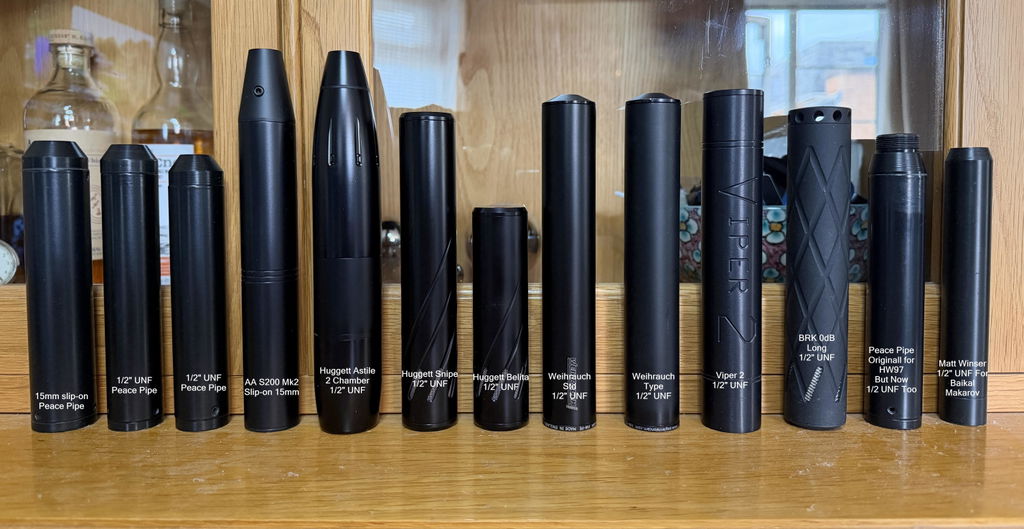
I know that all moderators/silencers/suppressors will sound different on any given gun and they are all compared to the ubiquitus Weihrauch mod. I tested my Reservoir Mod against the factory supplied FX mod on my .177 Impact Mk2 (which is freakishley quiet for an empty tube) and i thought the Reservoir Mod was a gnats louder. It is, however, a lovely peice of engineering. I will test it furthr against other mods in my collection like a Viper 2, Huggett Snipe, Astille and Belita as well as some Peace Pipes and some Weihrauch mods.
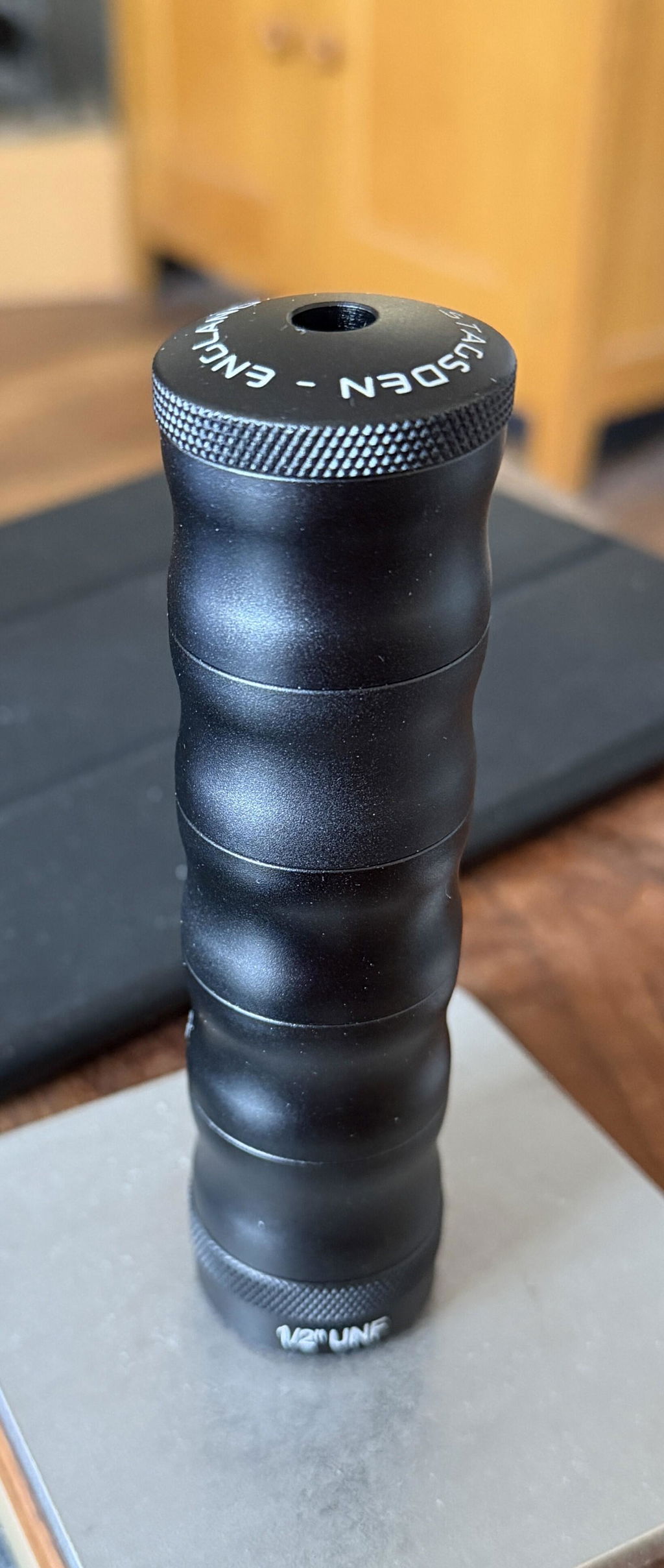
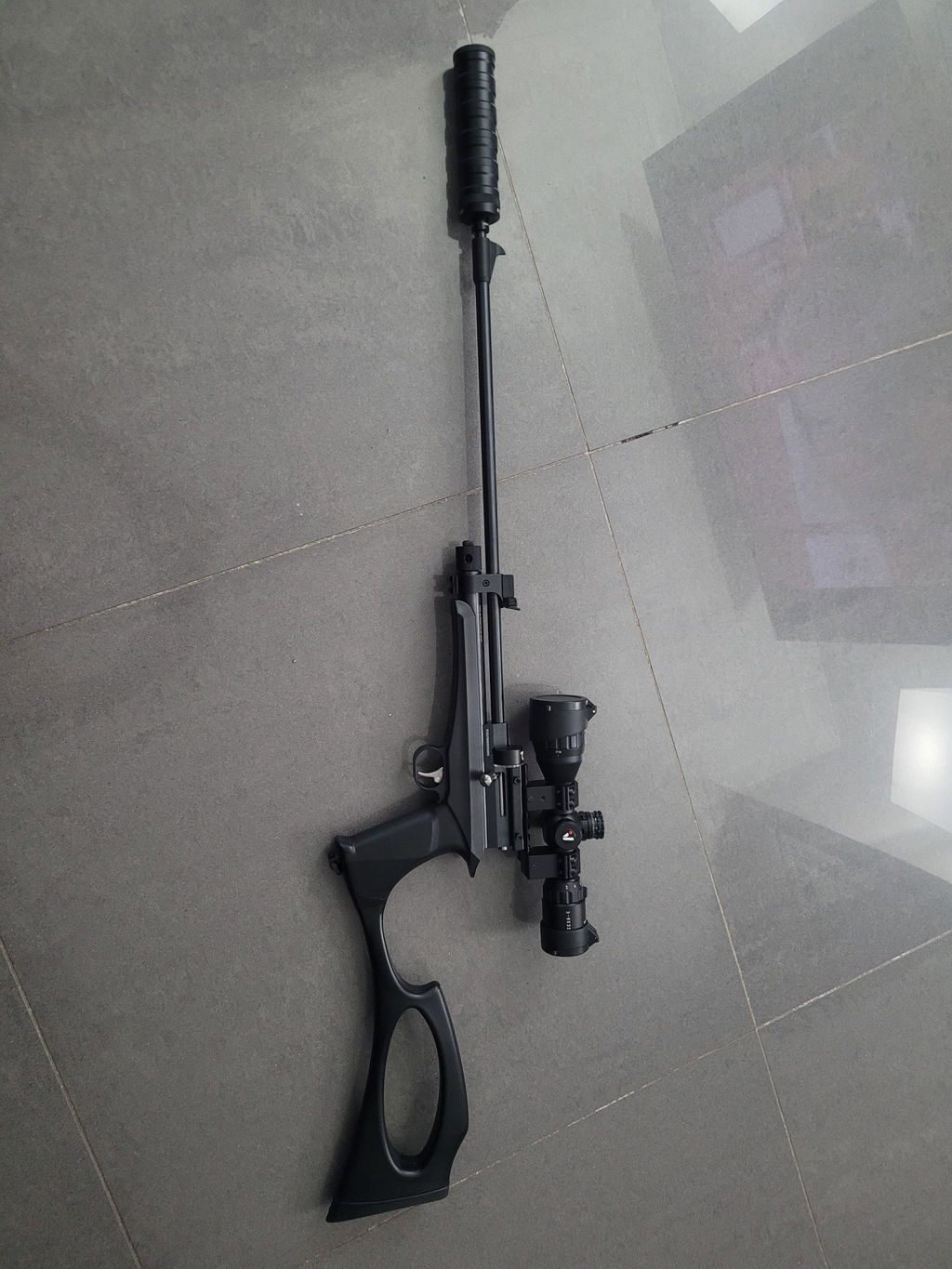
Superb purchase,great quality,tested on a few guns but keeping on my Cp2 ,shall have to buy a few more,definitely recommend Reservoir Mods 3LT. A Must have in your collection.
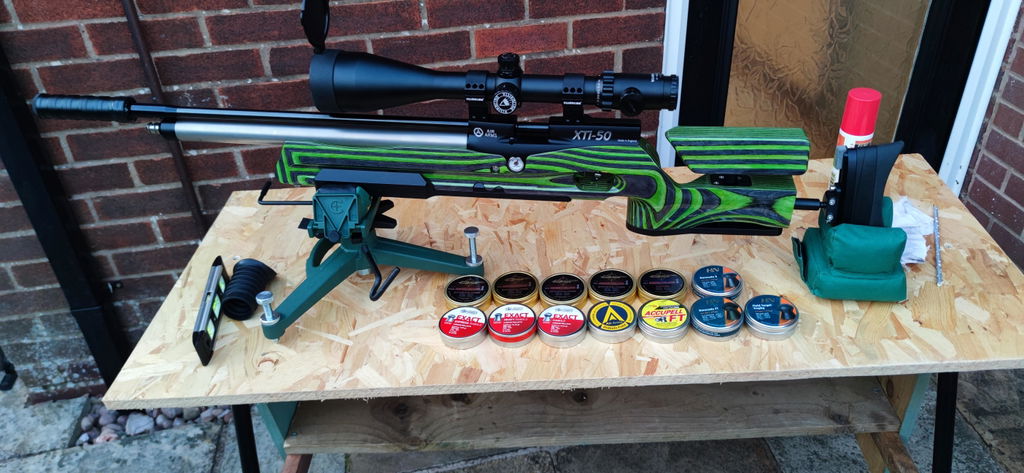
Really pleased with the moderator - it works well and well engineered and looks the part. What more could you ask for!
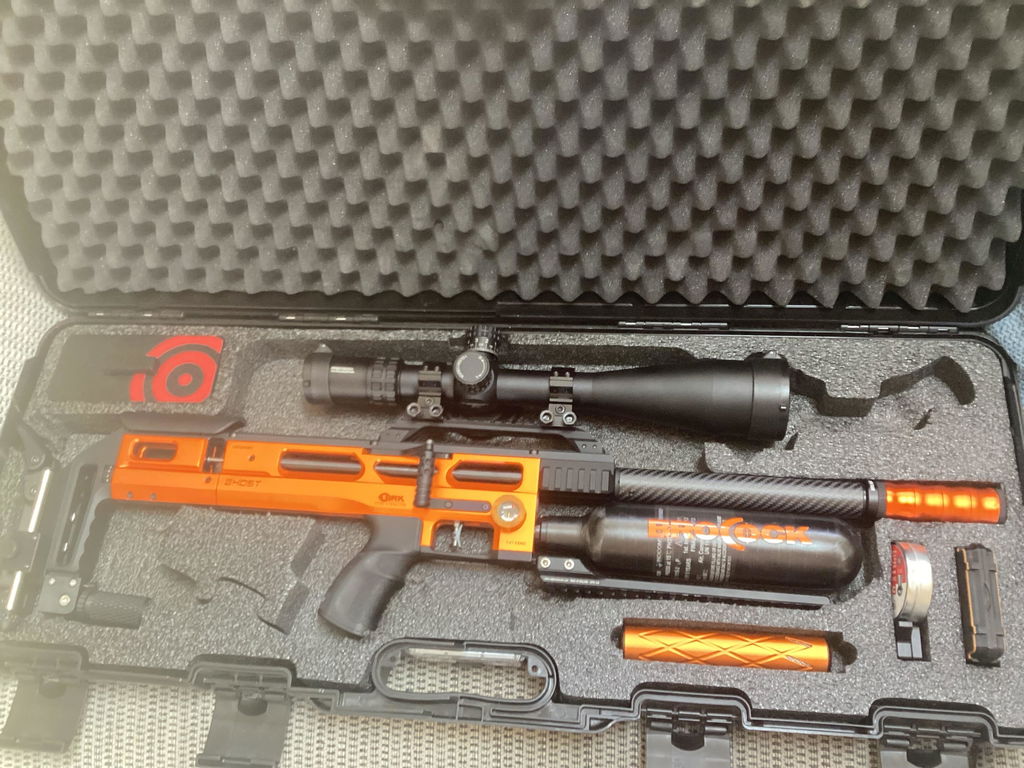
Excellent. Got the smaller one in orange to put on my BRK Ghost.i had to take one section off so it would fit in the hard case. Looking to get another one in black.the longer model..for my other rifle…great value for the price….
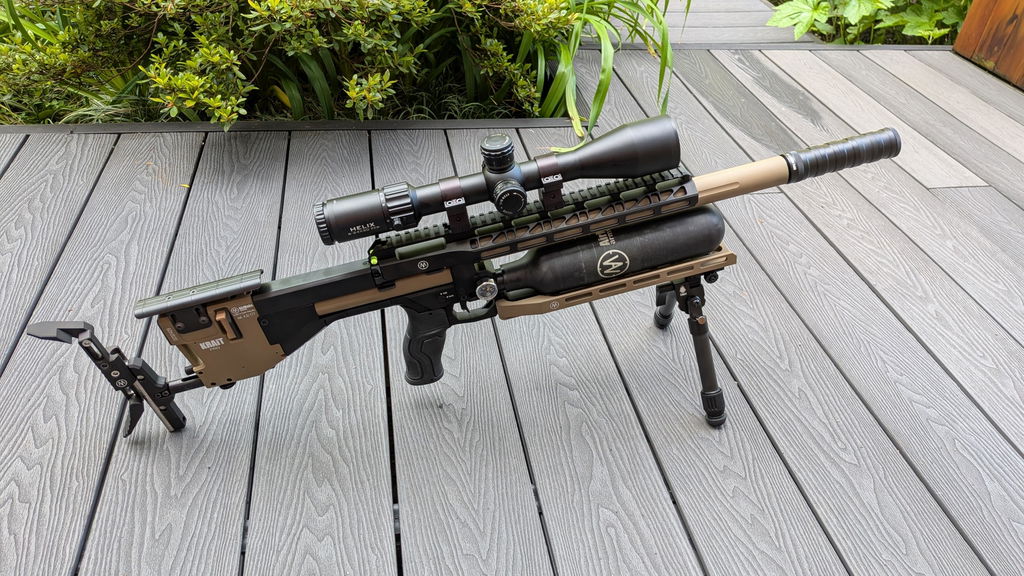
Quiet, well made - perfect for my needs. No change to POI or clipping.
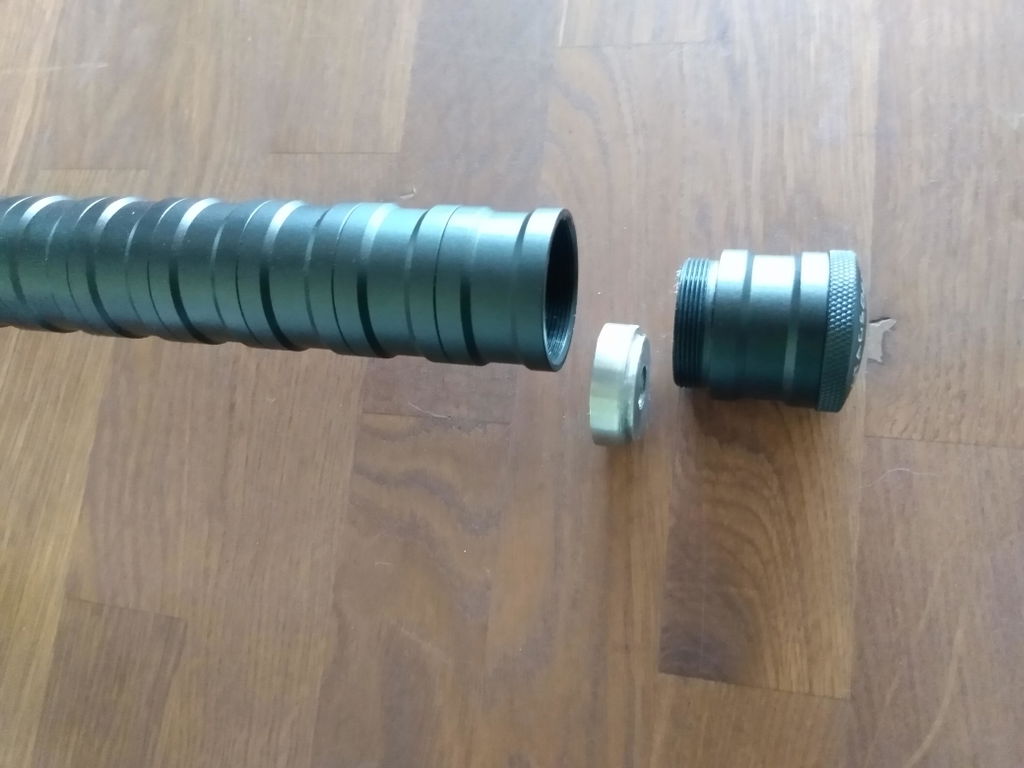
Exceptional accuracy especially when you move a added weight up and down inside different chambers and then fine tune with the number of chambers. Maybe you could add this to your product range or a dedicated mechanical weighted chamber.
excellent quality product and excellent service 👌
Very well made. Great idea to make it modular. Has quietened my Vintage MK2 Huntsman down really well. Good price too and made in the U.K. 👍
Very well made and looks great. More importantly it works VERY well as a moderator. I wold definitely buy again and might order some more segments.
brilliant service good price and quick postage spot on
A super fast delivery, brilliant product that's as good as much more expensive moderator's, would most definitely recommend 3 legged thing products
Very nice piece of kit
Makes my DRS tatical look cool and sound well tatical
Very satisfied with the item, Highly recommended
Excellent quality and
Works great on my bike ghost and i put one on my daystate rifle to they work great 👍 and look fantastic in time I.m going to put them on the rest of my rifles. Great job keep up the good work.
Brilliant product, very well made and dos what it says on the tin. And a reasonable.
A bit dubiuos about sound damping on this at first, but it is amazing! Would thoroughly rexommend.
Nicely engineered. I had to re zero on some of my rifles is that the norm Barry mayne
Amazing product top qwolaty item
Love it whent to my shooting club and 5 uthers had then all think thay are amazing wots not to like about them
Love this moderator, nice and slim (pistol freindy) and if you don't need super duper quiet, take some sections off, not that it heavy anyway but does lighten up the muzzle
So far so good, definitely quieter than stock mod.
What a high quality product. Build well, modular so you can add or subtract sections. Super impressed and arrived next day!
Works and fits really well
Very well made and just as I ordered. No ruff edges, smooth and streamline.
Very happy with my purchase.
Great mod - great price, and ideally suited to a vintage Mk 2 s200. Really pleased. I did however perform a direct comparison with the XLK using only the mark 1 eardrum and did find the XLK slightly quieter but then again its almost double the price.
Happy with my mod, well made with good materials and a UK company:-) Quick delivery too.
Thanks.
My Reservoir mods moderator in green is great. It works exceptionally well with my LG400 helping me achieve great groups at long range. I choose the chamfered design which looks fantastic.
Overall I am very happy with the form and funtion of this moderator
Nice moderator, good quality finish. Very quiet and suits my Black Wolf zero.
Great bit took a while to recive but thats ok
Great everything i was hoping it would be will be getting another one very happy
Your feedback fuels our designs
We design and engineer all of our products in the United Kingdom, and seek ways to innovate in order to create products that photographers love and want to use in their daily workflows.

FREE UK MAINLAND SHIPPING OVER £50


