A Guest Blog with an Introduction to Astrophotography written by expert Chris Grimmer.
With winter fast approaching and the promise of long dark nights ahead, we take a look at Astrophotography and what can be achieved with whatever we have in our kit bag. Astrophotography can take many forms, from simple star trails to multi-hour exposures of deepsky objects, but our humble DSLR or mirrorless camera can hold its own with all of them.

Key kit
Tripod
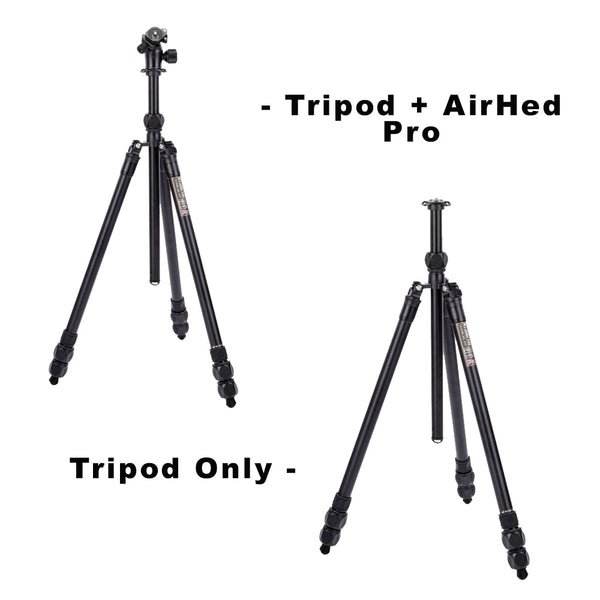
As Astrophotography requires long exposures, the first and most important item on our list of requirements is a solid tripod. This is as true when using a DSLR and compact lens, as it is when using heavy telephoto lenses or a telescope. As stars are pinpoint points of light, they are very unforgiving to any vibrations or movement. Any out of shape stars are therefore obvious in an image.
The weight of the tripod is another consideration. As most dark sky sites are rural, we often have a hike to get there, so a heavy tripod is far from ideal. Having said that, we also don't want something too light, as that often means they are prone to vibrations or wind.
Camera
The humble DSLR is your friend and will serve you well in all Astrophotography fields, as it provides the flexibility for us to change lenses, or even connect to a Telescope with the help of a T ring adapter. This opens up a multitude of possibilities and allows us to get creative.
The latest generation of Mirrorless cameras are a major step up in low light sensitivity, but any DSLR can also give great results.
Lens
Aperture/F.No is key when selecting your lens. The faster or lower the F Number, the more light you can collect in a shorter time. For example, if you took a single 5 second exposure at F2.4, you would need to shoot for 10 seconds at F4 to collect the same amount of light, or 40 seconds at F8. Given how faint the details we are trying to collect on continually moving objects, the more light you can collect in the shortest time frame the better.


Dark Sky Sites
One of the biggest struggles when trying to capture images of the night sky is light pollution, and finding dark locations is becoming ever more difficult. There are a few aids out there that can make the process easier, including websites and mobile 'apps'.
- lightpollutionmap.info – is a great place to start as it colour codes the severity of light pollution, with the ability to zoom in on areas you want to investigate.
- ClearOutside is an app for Android and iPhones. This is predominantly a weather app, but it also gives you the Bortle scale of the location (Bortle 1 is the darkest, while Bortle 9 means heavily light polluted and challenging).

Techniques
Foreground
One crucial thing to remember is not to neglect your foreground. The sky may be the reason you're there, but you still need a foreground or object to tie a widefield image together. I have always found old ruins to work really well i.e. churches or abbeys. Key landmarks like Windmills and Lighthouses are also great foreground objects. Again, there are applications that can help prep widefield shots:
- Photo Pills App – this is a paid for app that allows you drop a pin at your preferred location and will show you the location, rise and set positions of the Sun and Moon, plus the position of the Milky Way relative to the location. This allows us to plan ahead and know exactly how the skies will appear from our planned location.
Panoramas
The Milky way spans 180 degrees of the Sky, so Panoramas are a necessity as even the widest lenses cannot do it justice. Depending on whether its Autumn or Spring affects how the Milky Way appears.
Before sunrise in the Spring, the Milky way will appear lower in the Southern sky, whereas after sunset in Autumn is rises directly overhead. At these times, being able to orientate your camera in Portrait for the pano' can be a real bonus.

Depth Perception
When capturing 'Moon rise' images, your distance from the foreground subject is key. The Moon, even at its closest distance to Earth, will still appear small. But, using a telephoto lens and capturing the moon as it rises can give an appearance of enlarging the Moon. This is often best achieved when the Moon is rising at sunset and near the horizon, allowing for a lit foreground and not over-bright Moon.


Star Trails
One of the simplest Astrophotography methods as it can be done with any camera and lens combination, providing the camera can be set to a continuous shooting mode. Positioning yourself with the camera pointing North will create the best effect. This is because the Earth's tilt and rotation results in all stars rotating around the Pole Star ('Polaris'), so including this area in your image will give you lovely full circle trails.

Tips
Use the '500 rule' when setting your exposure time to keep stars round. Your lens' focal length divided by 500 equals the maximum exposure length you can achieve without stars trailing: so, for example, with a 14mm lens 500/14 = 35.7 second exposure. If using a crop sensor this exposure time decreases, and you need to add a crop sensor factor (this is 1.6x for Canon and 1.5x for Nikon cameras.) In this case with a Canon APC-S camera, 500/14 = 35/1.6 = 22seconds.
Focus can be a real nightmare when it is pitch black and there are no distant objects to focus on. So crank your ISO high, exposure up, open the aperture and turn on your live view. Point towards the brightest star you can see and zoom in on it in live view. Manually adjust your focus to get the star as small as possible.
Run an exposure and check the results, make a tiny adjustment and take another and compare to the previous until you are happy. Then adjust your setting to how you want them and get shooting.
When out shooting at night, always make sure you have a torch in your pocket, not only to help you see where to go, but to 'paint' the foreground or focal point of your image with light. A head torch comes in very handy.
Try using a coloured torch to add a different aspect to your image, or just to highlight interesting features with a quick light flash.
Chris Grimmer's Website: https://www.chrisgrimmerphoto.com/
Chris Grimmer's Instagram: https://www.instagram.com/chris.grimmer/?hl=en
All images ©ChrisGrimmer